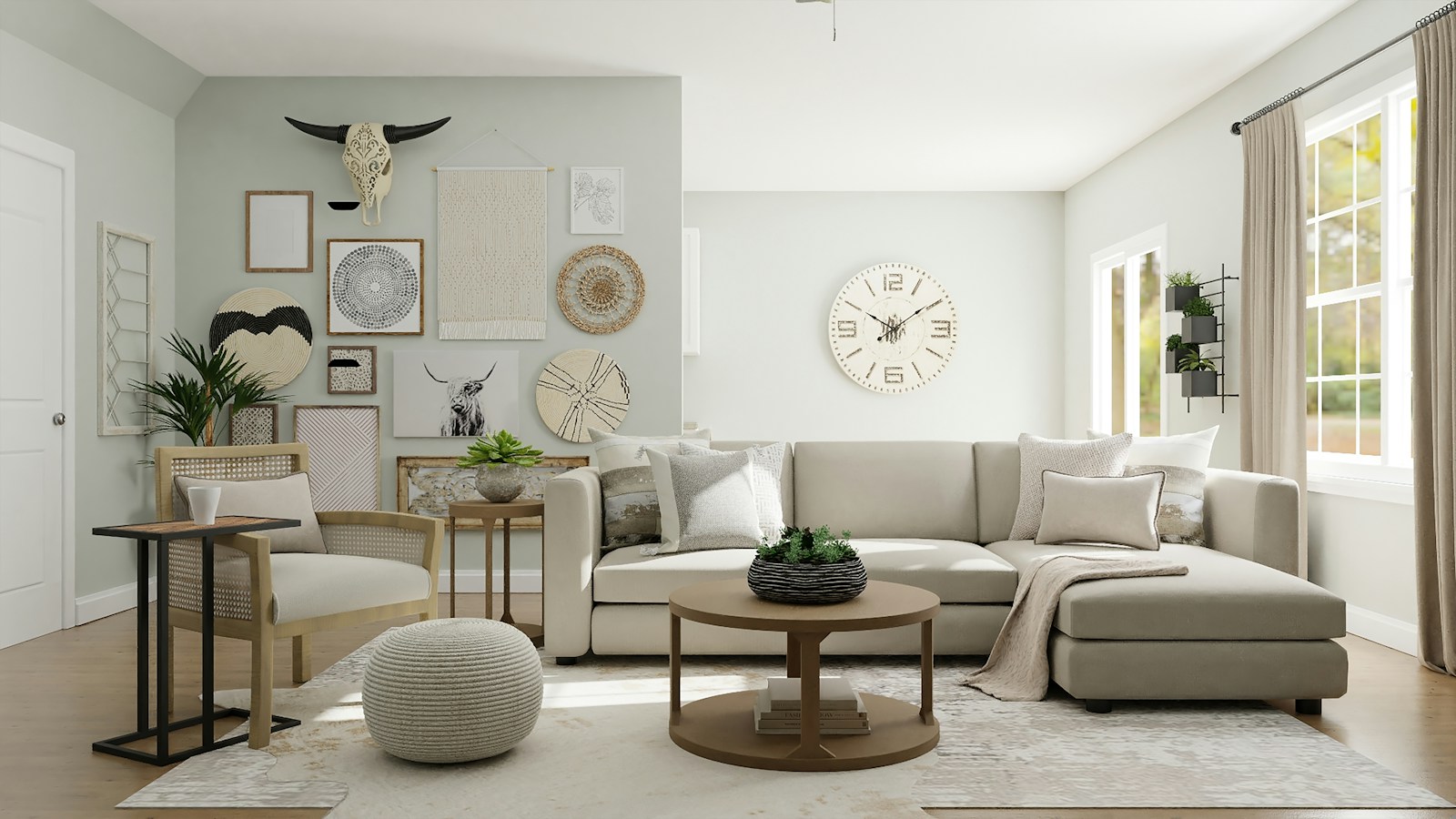
*A minimalist living room does not have to feel like a gallery. Done well, it feels like a held breath — quiet, unhurried, warm at the edges. The trick is that warmth is not added at the end; it is designed in from the first decision.*
Most rooms are not broken. They are simply under-considered. We move in, we fill the empty corners, we hang the first curtains that fit, and then we live around the result for a decade. The Warm Minimalist Living Room is an invitation to slow that down.
## Build a habit, not a project
The homes people admire are almost never the result of a single renovation. They are the accumulation of small, ongoing habits: a Sunday-morning shelf edit, a seasonal linen swap, a quiet audit of the entryway every few weeks. If a room is not working, resist the urge to spend money first. Spend attention. In most cases, attention is the missing ingredient — not budget.
In the context of the warm minimalist living room, this is where most rooms quietly go wrong. A single decision is made in isolation — a rug bought online without the sofa in the room, a paint colour chosen from a chip in a shop, a shelf styled at ten at night — and the whole space absorbs the compromise. Slow the decision down. Bring the samples home. Live with the choice for a few evenings under the lamps you actually own. If it still feels right on a grey Tuesday morning, you have your answer; if it does not, you have saved yourself a room-shaped regret.
It helps to write the decision down. Not as a mood board or a spreadsheet, but as a sentence: *I want this corner to feel quiet, warm, and slightly heavier at the base than at the top.* Once the sentence exists, every subsequent choice — the lamp, the side table, the fabric of the cushion — can be checked against it. Anything that does not serve the sentence goes back on the shelf. Anything that does moves forward. Rooms designed this way tend to hold together in a way that rooms designed object by object almost never do.
## Textiles do the emotional work
Hard surfaces set the structure of a room. Textiles set its temperature. A washed linen curtain that pools slightly on the floor, a wool rug thick enough to muffle a footstep, a cotton throw folded over the arm of a chair — these are the elements that turn a correct room into a warm one. Buy fewer, buy natural fibres, and be willing to wait for the right piece rather than filling the gap with a placeholder.
In the context of the warm minimalist living room, this is where most rooms quietly go wrong. A single decision is made in isolation — a rug bought online without the sofa in the room, a paint colour chosen from a chip in a shop, a shelf styled at ten at night — and the whole space absorbs the compromise. Slow the decision down. Bring the samples home. Live with the choice for a few evenings under the lamps you actually own. If it still feels right on a grey Tuesday morning, you have your answer; if it does not, you have saved yourself a room-shaped regret.
It helps to write the decision down. Not as a mood board or a spreadsheet, but as a sentence: *I want this corner to feel quiet, warm, and slightly heavier at the base than at the top.* Once the sentence exists, every subsequent choice — the lamp, the side table, the fabric of the cushion — can be checked against it. Anything that does not serve the sentence goes back on the shelf. Anything that does moves forward. Rooms designed this way tend to hold together in a way that rooms designed object by object almost never do.
## Design for how you actually live
There is a version of your home that exists in photographs and a version that exists at ten past seven on a Tuesday evening. Design for the Tuesday. If you eat at the coffee table more nights than at the dining table, the coffee table should be the right height for a plate. If shoes always end up by the door, put a beautiful bench there instead of pretending they will not. Meeting your real life with grace is the whole of it.
In the context of the warm minimalist living room, this is where most rooms quietly go wrong. A single decision is made in isolation — a rug bought online without the sofa in the room, a paint colour chosen from a chip in a shop, a shelf styled at ten at night — and the whole space absorbs the compromise. Slow the decision down. Bring the samples home. Live with the choice for a few evenings under the lamps you actually own. If it still feels right on a grey Tuesday morning, you have your answer; if it does not, you have saved yourself a room-shaped regret.
It helps to write the decision down. Not as a mood board or a spreadsheet, but as a sentence: *I want this corner to feel quiet, warm, and slightly heavier at the base than at the top.* Once the sentence exists, every subsequent choice — the lamp, the side table, the fabric of the cushion — can be checked against it. Anything that does not serve the sentence goes back on the shelf. Anything that does moves forward. Rooms designed this way tend to hold together in a way that rooms designed object by object almost never do.
## Edit like a curator, not a collector
Once a season, walk through the room with a box. Anything that has not been touched, worn, read, lit, or looked at with any pleasure in three months goes into the box. Live without it for two weeks. Most of it will not come back. This is not minimalism as aesthetic — it is minimalism as maintenance, the ongoing quiet work of keeping a home from silting up.
In the context of the warm minimalist living room, this is where most rooms quietly go wrong. A single decision is made in isolation — a rug bought online without the sofa in the room, a paint colour chosen from a chip in a shop, a shelf styled at ten at night — and the whole space absorbs the compromise. Slow the decision down. Bring the samples home. Live with the choice for a few evenings under the lamps you actually own. If it still feels right on a grey Tuesday morning, you have your answer; if it does not, you have saved yourself a room-shaped regret.
It helps to write the decision down. Not as a mood board or a spreadsheet, but as a sentence: *I want this corner to feel quiet, warm, and slightly heavier at the base than at the top.* Once the sentence exists, every subsequent choice — the lamp, the side table, the fabric of the cushion — can be checked against it. Anything that does not serve the sentence goes back on the shelf. Anything that does moves forward. Rooms designed this way tend to hold together in a way that rooms designed object by object almost never do.
## One bold accent is enough
Restraint is not the absence of colour or personality — it is the discipline of choosing one thing to say loudly. A single ochre chair. A dark, moody bookshelf against pale walls. A large piece of art that carries the whole room. When everything is trying to be the accent, nothing is; when one thing is, the rest of the room is finally allowed to rest.
In the context of the warm minimalist living room, this is where most rooms quietly go wrong. A single decision is made in isolation — a rug bought online without the sofa in the room, a paint colour chosen from a chip in a shop, a shelf styled at ten at night — and the whole space absorbs the compromise. Slow the decision down. Bring the samples home. Live with the choice for a few evenings under the lamps you actually own. If it still feels right on a grey Tuesday morning, you have your answer; if it does not, you have saved yourself a room-shaped regret.
It helps to write the decision down. Not as a mood board or a spreadsheet, but as a sentence: *I want this corner to feel quiet, warm, and slightly heavier at the base than at the top.* Once the sentence exists, every subsequent choice — the lamp, the side table, the fabric of the cushion — can be checked against it. Anything that does not serve the sentence goes back on the shelf. Anything that does moves forward. Rooms designed this way tend to hold together in a way that rooms designed object by object almost never do.
## Start with the light
Before anything else, spend a full day in the room without changing a thing. Notice where the morning light lands and where it disappears by four. Notice which corners stay dim even at noon. Almost every good decision that follows — where the reading chair sits, which wall wants a mirror, whether the room needs a warmer bulb — starts here. Light is the material we forget to design with, and it is the one that changes the room the most.
In the context of the warm minimalist living room, this is where most rooms quietly go wrong. A single decision is made in isolation — a rug bought online without the sofa in the room, a paint colour chosen from a chip in a shop, a shelf styled at ten at night — and the whole space absorbs the compromise. Slow the decision down. Bring the samples home. Live with the choice for a few evenings under the lamps you actually own. If it still feels right on a grey Tuesday morning, you have your answer; if it does not, you have saved yourself a room-shaped regret.
It helps to write the decision down. Not as a mood board or a spreadsheet, but as a sentence: *I want this corner to feel quiet, warm, and slightly heavier at the base than at the top.* Once the sentence exists, every subsequent choice — the lamp, the side table, the fabric of the cushion — can be checked against it. Anything that does not serve the sentence goes back on the shelf. Anything that does moves forward. Rooms designed this way tend to hold together in a way that rooms designed object by object almost never do.
## Negative space is a design element
Empty surface is not wasted surface. A shelf with two objects and a stretch of pale wood between them reads as considered. The same shelf with six objects reads as busy, even when each object is beautiful on its own. Give every important piece a small halo of nothing around it, and the room begins to breathe.
In the context of the warm minimalist living room, this is where most rooms quietly go wrong. A single decision is made in isolation — a rug bought online without the sofa in the room, a paint colour chosen from a chip in a shop, a shelf styled at ten at night — and the whole space absorbs the compromise. Slow the decision down. Bring the samples home. Live with the choice for a few evenings under the lamps you actually own. If it still feels right on a grey Tuesday morning, you have your answer; if it does not, you have saved yourself a room-shaped regret.
It helps to write the decision down. Not as a mood board or a spreadsheet, but as a sentence: *I want this corner to feel quiet, warm, and slightly heavier at the base than at the top.* Once the sentence exists, every subsequent choice — the lamp, the side table, the fabric of the cushion — can be checked against it. Anything that does not serve the sentence goes back on the shelf. Anything that does moves forward. Rooms designed this way tend to hold together in a way that rooms designed object by object almost never do.
## Sound, smell, and the invisible layers
Rooms are experienced by more than the eyes. A wool rug and a heavy curtain will change the acoustics of a hard-floored room more than any object you can add. A candle, a bunch of eucalyptus in the shower, coffee brewing on a slow morning — these are also design decisions. The rooms that stay with people usually get the invisible layers right.
In the context of the warm minimalist living room, this is where most rooms quietly go wrong. A single decision is made in isolation — a rug bought online without the sofa in the room, a paint colour chosen from a chip in a shop, a shelf styled at ten at night — and the whole space absorbs the compromise. Slow the decision down. Bring the samples home. Live with the choice for a few evenings under the lamps you actually own. If it still feels right on a grey Tuesday morning, you have your answer; if it does not, you have saved yourself a room-shaped regret.
It helps to write the decision down. Not as a mood board or a spreadsheet, but as a sentence: *I want this corner to feel quiet, warm, and slightly heavier at the base than at the top.* Once the sentence exists, every subsequent choice — the lamp, the side table, the fabric of the cushion — can be checked against it. Anything that does not serve the sentence goes back on the shelf. Anything that does moves forward. Rooms designed this way tend to hold together in a way that rooms designed object by object almost never do.
## A quiet closing note
None of this is prescriptive. Take the parts that suit the room you actually live in and leave the rest. The point is not to arrive somewhere finished — a home worth living in is never quite finished — but to keep making small, considered decisions in the same direction for long enough that the room, one day, looks up at you and feels entirely your own.
There is a slow, cumulative pleasure in a home that has been paid attention to. It is not the pleasure of a magazine spread or a finished project; it is the pleasure of a room that has been quietly re-read, season after season, until every object in it feels chosen rather than defaulted into. That pleasure is available in a rental, in a first flat, in a family house, in a downsized cottage. It has almost nothing to do with budget and almost everything to do with the willingness to look, and to keep looking, at the rooms we already have.